Sparkle at Scale: How AI Jewellery Product Photography Reimagines Visual Selling
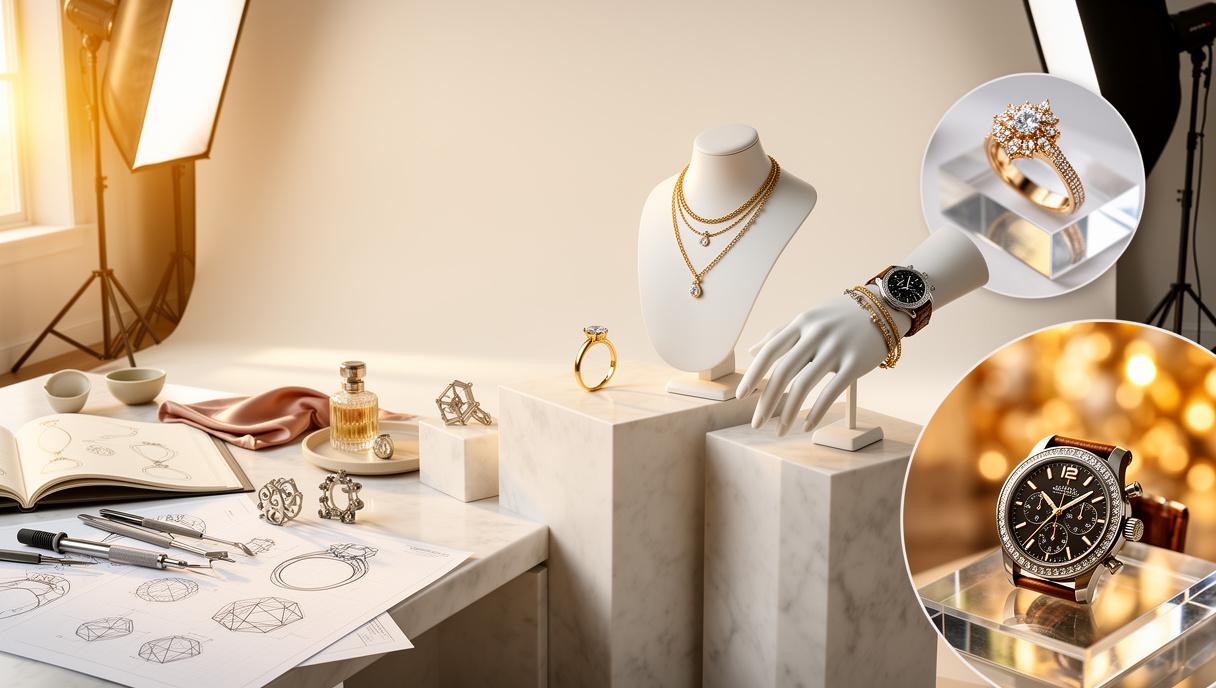
Rings, earrings, watches, and fine accessories live or die by how they catch the eye online. Every prong, pavé, and polished edge must look pristine across product pages, social campaigns, and print. Traditional shoots can achieve this, but they’re expensive, slow, and difficult to repeat at volume. That’s where AI jewellery product photography changes the playbook—translating sketches, CAD, and simple snapshots into studio-grade images with the speed, realism, and consistency modern brands need. Whether launching a new collection in London, refreshing a marketplace listing in New York, or scaling a seasonal campaign across the GCC, AI-driven workflows let teams move faster while protecting the craft and character that make fine pieces desirable.
Why AI Is Tailor‑Made for Jewellery Imagery
Jewellery is visually demanding. Tiny surfaces throw harsh reflections. Gemstones require accurate dispersion and scintillation to look convincing. Metal tone must stay true—rose gold can’t skew too copper, platinum can’t go flat—while shadows and micro‑contrast determine whether engraving and milgrain details read clearly on a phone screen. Classic setups with softboxes, macro lenses, and polarisation do the job, but they’re time‑intensive, and matching shots from one season to the next is tough. AI-driven image production solves these pain points by simulating controlled light, optimising reflections, and enhancing surface fidelity in a repeatable, template‑friendly way.
Modern systems ingest inputs like sketches, CAD files, or reference photos and generate photorealistic packshots, lifestyle scenes, or on‑model cuts. Material‑aware rendering helps metals stay believable under multiple environments, while gemstone logic respects cut, clarity, and colour. Smart relighting tools recreate soft studio wraps or high-contrast lookbooks without reshoots, and precision masking preserves fine details such as openwork settings and delicate chains. Because the output is consistent by design, brands can roll out an entire range with uniform camera angles, backgrounds, and styling, ensuring PDPs feel cohesive and professional.
Speed and scalability are the other major wins. Instead of booking locations, models, and retouching crews, a designer can turn around a full set of 2K and 4K visuals in days or even hours. This matters when social calendars demand fresh content, retailers request variant images, or a trend crests and you want to capitalise now—not next quarter. For marketplaces, AI templates align with white‑background requirements, pixel dimensions, and silhouette consistency. For brand channels, the same pieces can be placed into lifestyle compositions—on a marble vanity, in a sunlit atelier, or worn in a clean editorial frame—using reusable “scenes” that keep art direction on‑brand across seasons.
Crucially, these gains don’t mean sacrificing authenticity. State‑of‑the‑art AI preserves real‑world imperfections that make pieces feel tangible: the gentle bevel of an edge, the way a stone catches a stray glint, the soft falloff of a cast shadow. When artisans and luxury houses want to emphasise craft, the system can prioritise macro‑level clarity and naturalistic highlights. When e‑commerce needs speed, it can prioritise batch‑ready consistency and colour stability across metal families and stone variants.
From Sketch to Storefront: A Practical Workflow That Protects Detail
Effective AI jewellery product photography starts with the inputs. Designers often work with CAD formats like STL or OBJ; heritage houses may have STEP files or high‑res scans; independent makers might rely on mobile photos and sketches. A modern pipeline standardises these assets, then maps physically based materials—yellow, white, or rose gold; silver; platinum; titanium; and realistic gemstone shaders—to replicate how light behaves on each surface. This is where neural relighting and environment logic shine: they control reflections and shadows so prongs, bezels, and facets read accurately in the final composition.
Once materials are set, brands select shot types. Need clean packshots for PDPs and marketplaces? Choose consistent angles (front, three‑quarter, top, macro detail) with soft, neutral lighting that reveals structure without glare. Launching ads or social reels? Opt for lifestyle campaigns that place pieces on tasteful props—linen, velvet, travertine—or in aspirational settings like a Mayfair apartment or a Dubai boutique interior. Requiring human context? Use on‑model imagery with hand, ear, neck, or wrist placements to show scale and wearability. Each option benefits from reusable templates, so new SKUs slot into pre‑approved looks with zero drift.
Editing and brand control complete the loop. An intuitive, drag‑and‑drop studio lets teams adjust camera perspective, depth‑of‑field, and micro‑contrast. Smart editing handles background swaps, dust cleanup, and chain straightening, while preserving stone fire and metal sheen. Need local variations? Duplicate a scene with regional nuances—London’s cool overcast feel for UK retailers, warmer tones for Southern Europe, brighter highlights for Middle Eastern campaigns—without re‑shooting. For omnichannel demands, export 2K or 4K assets tailored to PDPs, Instagram, TikTok, and print lookbooks, all from the same master composition.
Consider a common scenario. A boutique maker in Hatton Garden finalises CAD for a 12‑piece bridal capsule and wants to presell online before production. In a single afternoon, they ingest CADs, pick a neutral packshot template, and generate uniform angles for every SKU. Then they clone the setup into a lifestyle scene—a linen runner with soft morning light—and create on‑model setups featuring a hand close‑up and a neckline shot for scale. Pricing and copy go live that week; wholesale partners get a press kit; early orders finance the production run. That’s the power of AI jewellery product photography applied to a real business cadence.
Quality, Realism, and Brand Consistency—Without Slowing Down
High‑end buyers can spot an inauthentic highlight or an off‑tone metal immediately. Protecting realism means handling three essentials: colour accuracy, surface fidelity, and lighting continuity. AI platforms address these with calibrated metal palettes, gemstone behaviour tuned for cut and carat, and environment maps that keep specular highlights believable. Teams can calibrate against physical samples or reference shots to ensure, for instance, that 18k yellow reads warmer than 14k and that white gold sits distinct from platinum. On diamonds, algorithms respect scintillation and dispersion so pavé fields don’t flatten; on emeralds and sapphires, saturation remains intact without plasticising the stone.
Surface fidelity is just as vital. Fine engraving, micro‑pavé, and milgrain need controlled shadow to stay visible on mobile. With AI jewellery product photography, micro‑contrast and shadow density are adjustable per SKU or template, allowing delicate features to “breathe” without introducing noise. Chain behaviour—kinks, tension, and gravity—can be normalised for elegance or left slightly organic for a handcrafted aesthetic. For watches and accessories, anti‑reflective logic tames crystal glare while preserving the sparkle of applied indices and polished lugs.
Consistency pays measurable dividends. Brands report better PDP engagement when assets share angle, background, and scale conventions across collections. CTRs on social ads improve with cohesive art direction, and conversion rates lift when shoppers can compare variants side by side without visual drift. In practical terms, that means faster merchandising cycles: a New York retailer can receive CADs on Monday and publish polished product pages by Friday, while a Dubai concept store repurposes the same SKUs into Arabic‑language campaigns with warmer tones and regional styling. Because everything is template‑driven, seasonal refreshes and new stone or metal variants drop in seamlessly.
Finally, control doesn’t stop at pixels. Rights and approvals stay centralised: marketing can lock brand palettes; e‑commerce can enforce marketplace‑compliant crops and backgrounds; creative can experiment in sandbox scenes without risking live assets. When production ramps up—think holiday drops or bridal season—batch generation keeps quality level and tone intact, while editing tools refine hero shots for print. The result is a repeatable, brand‑safe system that turns craftsmanship into conversion: jewellery that looks as exquisite on a screen as it feels in the hand, delivered with the speed today’s channels demand.

Sofia-born aerospace technician now restoring medieval windmills in the Dutch countryside. Alina breaks down orbital-mechanics news, sustainable farming gadgets, and Balkan folklore with equal zest. She bakes banitsa in a wood-fired oven and kite-surfs inland lakes for creative “lift.”


Post Comment