Stop Letting Dirty Runoff Decide Your Budget: Build a Smarter Wash Rack
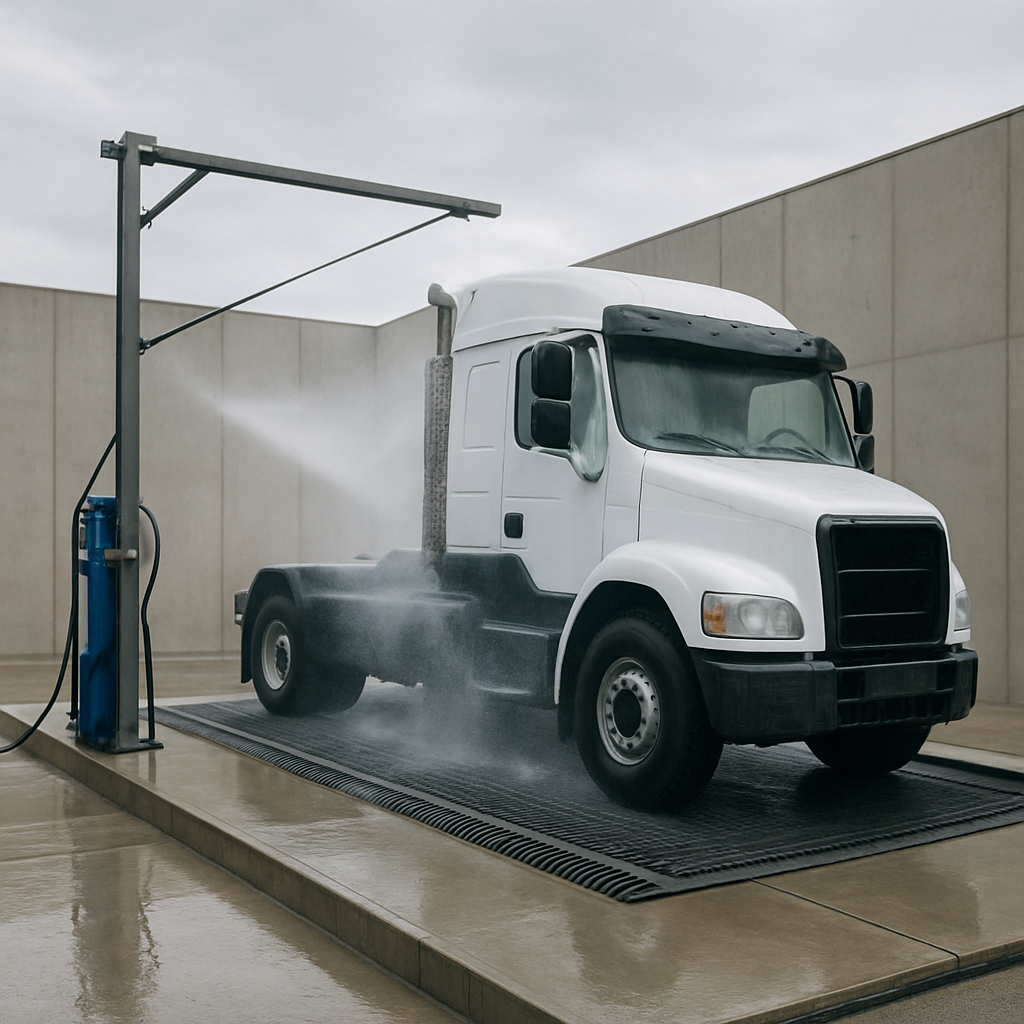
What a Wash Rack Does—and Why Compliance and Equipment Life Depend on It
A wash rack is more than a place to spray off grime; it’s a controlled platform designed to capture, contain, and treat wash water so you’re not pushing oils, salts, and sediment into storm drains. At its core, a wash rack integrates containment, solids management, and liquid treatment so that contaminated runoff doesn’t become an environmental liability. Whether you manage snow-fighting fleets, construction equipment, refuse trucks, or street sweepers, capturing what’s coming off your assets is the difference between proactive maintenance and reactionary cleanup.
Regulators care about wash water because it can carry detergents, petroleum residues, metals, and road salts straight to receiving waters. Under the Clean Water Act, many facilities operate with stormwater permits tied to NPDES compliance, and those permits often prohibit non-stormwater discharges. A purpose-built wash rack solves this by isolating wash activities from the storm system and routing flow to treatment—typically including solids separation and an oil-water separator—before discharge, reuse, or hauling. This is how organizations reduce risk, minimize fines, and demonstrate a credible best-management practice (BMP) during inspections.
Beyond compliance, a properly designed wash rack pays dividends in equipment life. Removing corrosive brine, mud, and chemical residues extends the service intervals for brakes, undercarriages, and hydraulic components. Clean equipment is easier to inspect, so cracks, leaks, and worn hoses are caught earlier. The payoff isn’t abstract: fewer road calls, lower parts spend, and better resale. When wash activities are centralized on a rugged pad with effective drainage, technicians work faster and safer, and you stop tracking sludge across the yard—or worse, into shop bays.
Operations teams also gain control over water and soap usage. With integrated water reclaim, you can loop treated water back to high-volume rinse steps, reserving fresh water for final rinses. This lowers utility spend and can keep you under local use thresholds. In drought-prone or high-rate regions, reclaim systems transform washing from a cost center to a managed process with predictable inputs and outputs.
Finally, the visibility of a reliable wash rack reinforces a culture of care. Drivers and operators are more likely to follow SOPs when the system is convenient and reliable: ramps at the right angle, non-slip grating underfoot, and controls that make sense. When washing is easy, it happens more often—and that consistency is what reduces environmental exposure while improving fleet readiness.
Designing the Right System: Components, Sizing, and Filtration That Actually Works
Great results start with a solid foundation. The heart of any effective system is the containment pad, engineered to handle axle loads, support equipment, and route water to treatment. Pads can be poured-in-place concrete or modular steel with removable grating for sludge access. Berms or ramps keep water on the pad; trench drains or center troughs move it to a sump without pooling. Specify non-slip surfaces, wheel stops, and clear traffic lines so vehicles align correctly every time.
Next comes solids management. Heavy materials—gravel, sand, millings—should drop out early in a pit or sloped channel to protect downstream equipment. Include easy access for vacuum trucks or a built-in dredge to keep maintenance simple. Once grit is captured, flow should pass through an oil-water separator sized to your expected gallons-per-minute (GPM). Undersized separators let emulsions slip by; oversized units waste footprint and budget. Match separator ratings to pressure washer output, nozzle count, and peak simultaneous use, allowing a safety factor for surges and variable foaming.
Treatment trains often continue with media filtration—coalescing packs, carbon, or specialty resins—especially when you’re targeting reuse. A resilient water reclaim loop includes a settling tank, circulation pumps, and filtration stages that stand up to soaps and fine silts. Consider antimicrobial dosing or aeration to prevent odors when water is stored. For cold climates, add heat tracing, steam, or glycol in critical lines, and spec enclosed cabinets for pumps and controls. Where electricity is limited, engine-driven pumps or hybrid power can keep reliability high.
Choose pressure washing tools to match your soils and surfaces. Adjustable lances, undercarriage spinners, and foaming applicators help loosen caked materials without excessive chemicals. Use biodegradable detergents designed for separators so you don’t create stable emulsions that defeat gravity-based treatment. Meter soap carefully; more isn’t always better and can tax your system. Plan for sludge collection with dewatering bags or roll-off boxes so disposal remains predictable and compliant with local waste rules.
Finally, build safety and longevity into the details. Specify backflow protection on potable connections, eyewash availability when chemicals are nearby, and clear lockout points for pumps. Design electrical to NEMA ratings appropriate to spray zones. Account for freeze-thaw, UV, and corrosion with coatings and stainless hardware. Document your flow path, valve positions, and service intervals so operators can troubleshoot quickly. When all these elements are unified, the wash rack becomes a reliable process line rather than a messy corner of the yard.
Field-Proven Scenarios, ROI, and Best Practices for Municipalities, Fleets, and Contractors
Consider a snowbelt public works yard washing plow trucks loaded with salt and brine. In winter, corrosion accelerates with every thaw-refreeze cycle. A heated rack with undercarriage spinners and a reclaim loop allows quick daily rinses that strip salts before they attack frames, harnesses, and brake lines. Solids drop into a grit pit; the oil-water separator removes hydrocarbons; the reclaim loop feeds rinse stages. Over a season, reduced rust repair and fewer seized components typically outpace the operating cost of pumps and filters, not to mention the avoided scrutiny from stormwater audits.
On a construction site, a portable wash rack helps stop sediment tracking onto public roads. Modular steel pads and collapsible berms deploy in a day, capturing mud from loaders and haul trucks before they leave the gate. Rather than paying for street sweeping and risking citations, the GC processes slurry through settling tanks and bags, then either reuses water for dust control or trucks it off-site. This practice supports SWPPP commitments, protects nearby catch basins, and keeps neighbors on your side. When the project moves, the rack moves too—bringing performance and documentation to the next job.
For private refuse haulers and municipal solid waste fleets, odors and leachate are constant battles. A dedicated fleet washing bay with high-impact foam and hot water loosens organics quickly. Because detergents can emulsify oils, the treatment train emphasizes dwell time in the separator and includes polishing filters before reuse or discharge. With scheduled weekly deep cleans and fast daily rinses, facilities report fewer pest issues, better operator morale, and improved public image—critical when your trucks are branding on wheels. Insurance carriers also view well-managed washing as a sign of risk maturity, which can positively influence premiums.
Across these scenarios, the ROI comes from four levers: extended asset life, reduced unscheduled downtime, lower water and soap consumption via water reclaim, and minimized regulatory exposure. To capture that value consistently, adopt a few best practices. Start with a site-specific risk assessment: Identify pollutants of concern (oils, salts, metals), expected GPM, and seasonal extremes. Select pad materials and coatings for your heaviest loads and soils. Standardize SOPs so operators know how to stage vehicles, when to engage undercarriage tools, and how to inspect pits and filters at the end of shift. Track metrics—water use, filter changes, sludge volumes—so you can justify adjustments and budget requests with data.
Don’t overlook local intent. In MS4 communities and industrial corridors, inspectors expect credible BMPs, documented maintenance, and evidence that non-stormwater discharges are controlled. Coordinate early with your environmental team and permitting authority about discharge points, sampling needs, and whether you’ll discharge to sanitary, haul away, or reuse. Where space is tight, consider compact separators, vertical tanks, or a split solution with treatment skids inside a mechanical room and a low-profile pad outdoors. If your operation is seasonal, design for quick winterization and spring startup so the wash rack supports the rhythm of your work rather than disrupting it.

Sofia-born aerospace technician now restoring medieval windmills in the Dutch countryside. Alina breaks down orbital-mechanics news, sustainable farming gadgets, and Balkan folklore with equal zest. She bakes banitsa in a wood-fired oven and kite-surfs inland lakes for creative “lift.”


Post Comment