Breach Investigation Services That Put People First
What professional breach investigation services actually do
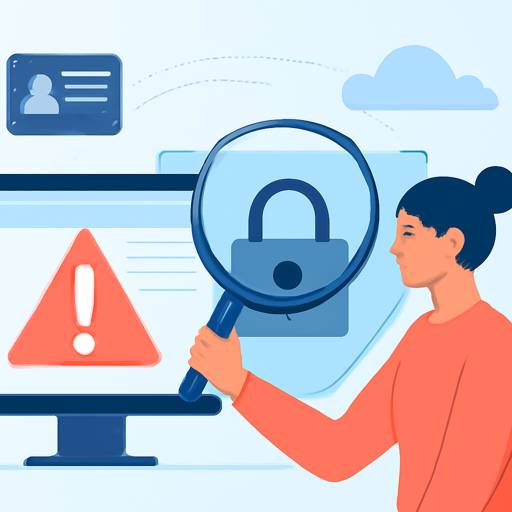
When something feels off with your phone, email, or home network, guessing isn’t a strategy. Breach investigation services provide structured, methodical response designed to answer three urgent questions: What happened? How far did it go? How do we stop it and keep it from happening again? For private clients, families, founders, and executives, the stakes are personal as well as professional—privacy, safety, finances, and reputation can hinge on the next decision. A mature investigation blends digital forensics, incident response, and practical risk reduction to deliver clarity fast.
Every engagement begins with triage and containment. Investigators work to reduce ongoing harm—revoking active sessions, disabling malicious OAuth grants in cloud accounts, forcing credential resets, isolating affected devices, and preventing attacker re-entry. At the same time, they preserve evidence—backing up logs, capturing volatile data, and documenting timelines—so the root cause can be understood without tipping off a threat actor or destroying proof that may be essential for legal or HR actions later.
From there, the team performs a comprehensive forensic analysis. On personal devices, that may include identifying stalkerware or hidden configuration profiles, reviewing mobile backups, analyzing SMS logs for SIM-swap indicators, and scanning for persistence mechanisms. On laptops and desktops, disk imaging, memory capture, and artifact analysis help pinpoint malware, credential theft, and lateral movement. In cloud accounts (email, storage, calendars, collaboration tools), investigators correlate sign-in telemetry, mailbox rules, app authorizations, and API calls to reconstruct attacker behavior and data exposure. Routers and home networks are assessed for weak configurations, unmanaged devices, and rogue access points.
With facts established, a remediation plan addresses both the immediate breach and the conditions that enabled it. This often includes hardened authentication (unique passwords, hardware security keys, phishing-resistant MFA), secure device rebuilds, revoking legacy protocols, tightening app permissions, and redesigning recovery workflows to prevent lockouts and social engineering. Where appropriate, investigators can coordinate with counsel, insurers, or law enforcement and offer guidance on documentation for civil remedies. If you need a discreet, human-centered approach that understands real-world dynamics—like family disputes, travel, and multiple personal accounts—see how our Breach investigation services align with your situation.
How modern breaches target people—and how investigators uncover the truth
Cyber incidents rarely start with “advanced” malware. They begin with human realities: a phishing email that bypasses spam filters, a text prompting an MFA code, a calendar invite that silently grants access, or an ex-partner who quietly installs surveillance software. Effective breach investigation services recognize these patterns and know where to look for quiet footprints that common antivirus tools ignore.
Attack vectors often include credential stuffing against reused passwords, “MFA fatigue” push spam that wears down a victim, OAuth consent phishing that creates backdoor access without needing a password, SIM swaps that hijack SMS-based codes, and illicit configuration profiles that give attackers device-level control. For families and private clients, home networks can be soft targets—guest devices, smart cameras, unpatched routers, and overlapping cloud accounts that blur the boundary between “work” and “personal.” Executives face added risks from doxxing, harassment, travel exposure, and open-source intelligence that makes targeted pretexting easier.
Investigators map out an end-to-end timeline using proven methods. They gather log data from email providers, identity platforms, and devices; compare IP geolocation and user agent strings; identify persistence techniques like malicious mailbox rules, hidden forwarding, and scripted tasks; and analyze artifacts such as quarantine reports, browser credential stores, and endpoint telemetry. On mobile, they scrutinize accessibility services abuse, side-loaded apps, VPN profiles, Hotspot logs, and telemetry gaps that indicate tampering. On networks, they look for suspicious DNS, encrypted tunnels to unknown endpoints, or traffic patterns inconsistent with normal usage.
Results are aligned to attacker tactics and techniques—pinpointing initial access, privilege escalation, data collection, exfiltration, and command-and-control. This approach not only tells you what happened; it justifies remediation instructions you can trust. If a device is unrecoverable without a full rebuild, you’ll know why. If your email needs OAuth audits and token revocations, you’ll get exact steps, not generic advice. And if the breach intersects with harassment, insider threats, or family safety concerns, investigators ensure evidence is preserved with chain-of-custody discipline, supporting protective orders, HR actions, or civil claims while minimizing the risk of alerting the adversary prematurely.
Finally, a good investigation anticipates tomorrow’s attempt. That means reshaping identity recovery processes (so support agents can’t be socially engineered), implementing phishing-resistant authentication for key accounts, segmenting home and work devices, and adding targeted monitoring that respects privacy. The goal isn’t security theater—it’s practical, durable protection calibrated to your life.
Real scenarios that show what effective breach investigations look like
Ex-partner surveillance on a phone: A client noticed unusual battery drain, random Bluetooth behavior, and repeated pop-ups requesting accessibility permissions. Forensics revealed a side-loaded monitoring suite masked as a “system update,” paired with a malicious profile that reinstalled it after removal. The investigator preserved evidence, documented the installation timeline, and provided clean-device procedures along with a court-ready report. Remediation included a new device activated from a safe environment, hardware-based MFA across personal accounts, and education on when and how to power down radios during sensitive meetings or travel.
Long-term email compromise in a family account: A family patriarch’s mailbox quietly forwarded all messages to an attacker for months via a subtle rule that deleted its own alerts. Compromise spread as contact replies were harvested for targeted phishing. The team reconstructed sign-in history, identified the consent-phished app that created persistent access, and mapped which documents were exfiltrated. Remediation involved revoking OAuth tokens, disabling legacy protocols, implementing security keys for the family’s core accounts, and setting up a monitored “tripwire” rule to detect future rule tampering. The family received a notification plan for affected contacts and step-by-step instructions to avoid triggering retaliation by the attacker.
Executive phone “gaslighting”: An executive was told she was paranoid after reporting call drops and calendar changes. Investigation found her iCloud-integrated email had malign delegated access, her carrier account had weak PIN protections, and a malicious calendar subscription was injecting events with embedded tracking links. The team moved her to hardware keys for critical accounts, added an account recovery playbook with unique passphrases not stored anywhere digital, hardened the carrier profile, and removed stealth sharing features across devices. A private report validated her concerns and provided documentation for HR and compliance.
Romance-scam data exposure: A client shared scans of IDs and financial details with a fraudster who then threatened to leak them. Investigators assessed which assets were at risk, locked credit reports, rotated exposed credentials, monitored for attempted account takeovers, and coordinated safe communications that ended the extortion attempt. By reconstructing the adversary’s access paths, they eliminated re-entry points and provided guidance on future verification habits, including out-of-band checks and document redaction.
Nonprofit spear-phish and donor list theft: A small team without an IT department lost a donor list through a single mailbox compromise. The investigation identified the initial phish, measured the actual exposure window, and restored confidence with stakeholders using an evidence-driven impact report. The remediation plan introduced basic but powerful protections: role-based aliases, restricted app authorizations, security key MFA for finance and donor-relations accounts, and an internal “report phish” workflow. The nonprofit moved forward without expensive tooling—just the right controls in the right places.
These examples underscore a core reality: effective breach investigation services meet people where they are. Some cases demand quiet, discreet action to avoid escalating a personal conflict. Others require clear documentation for insurers, counsel, or regulators. In every scenario, the value lies in translating technical truth into practical steps—containment that sticks, remediation that closes the actual gap, and preventive measures that fit daily life. Whether you’re protecting a family, a founder’s device stack, or a small team’s critical accounts, the right investigators deliver certainty when it matters most.

Sofia-born aerospace technician now restoring medieval windmills in the Dutch countryside. Alina breaks down orbital-mechanics news, sustainable farming gadgets, and Balkan folklore with equal zest. She bakes banitsa in a wood-fired oven and kite-surfs inland lakes for creative “lift.”


Post Comment